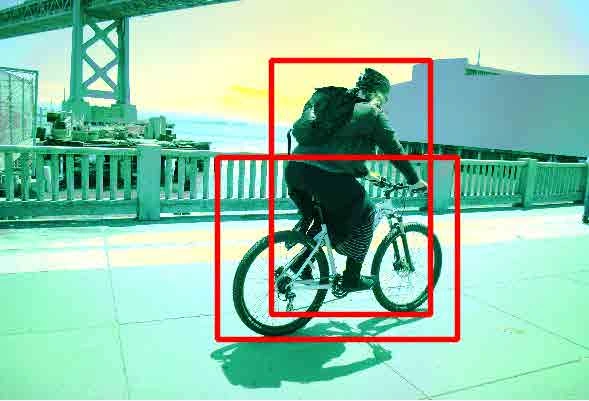
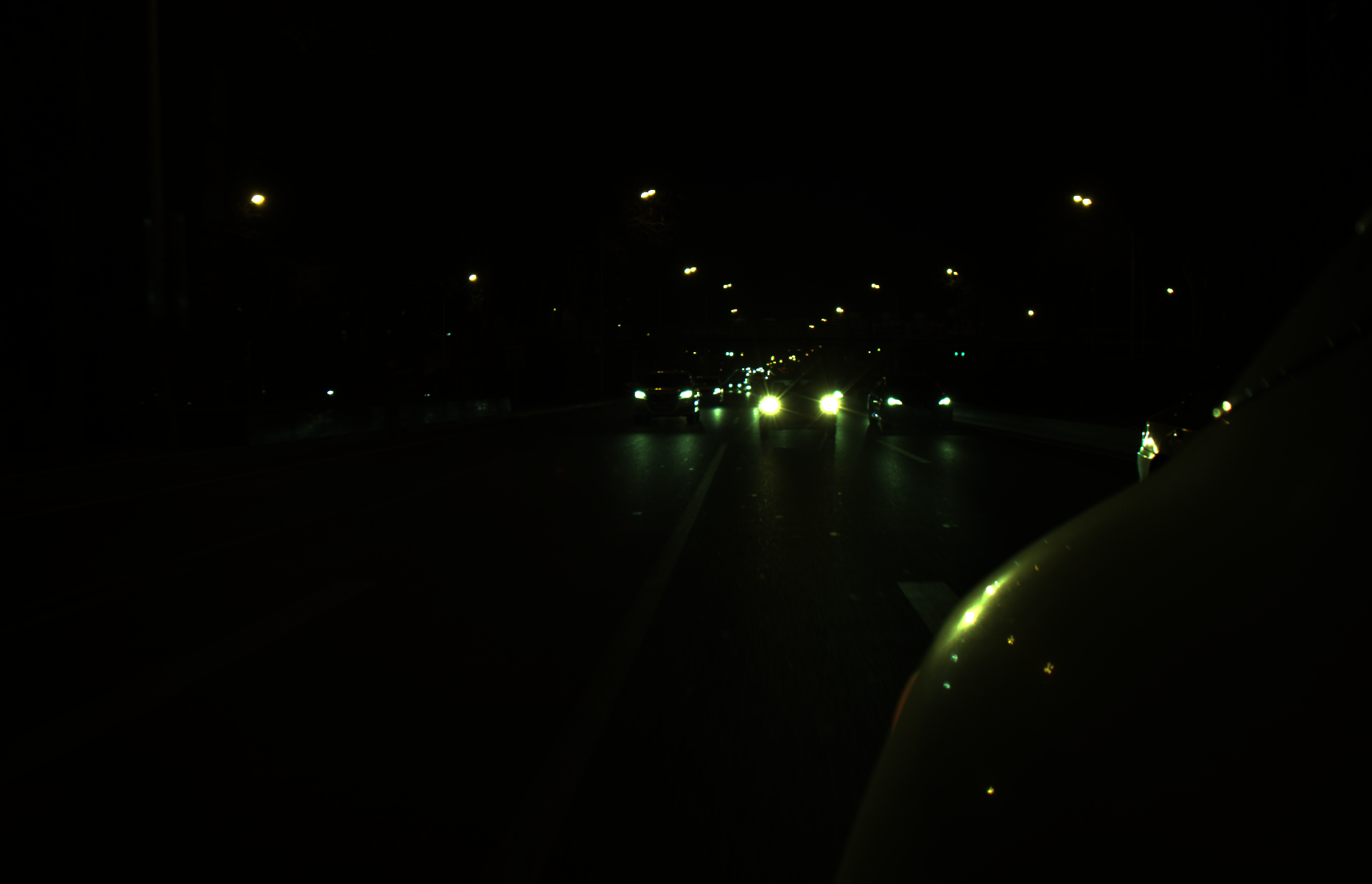
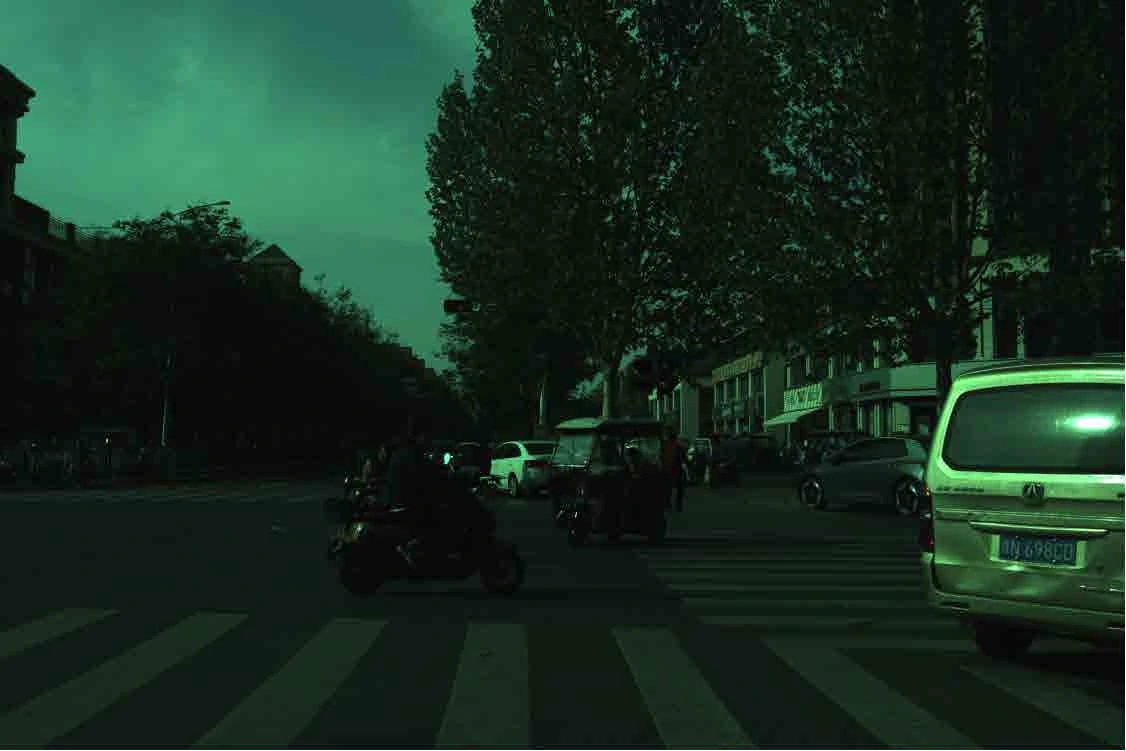
- Linear RAWWhat the sensor records. At night, almost black.
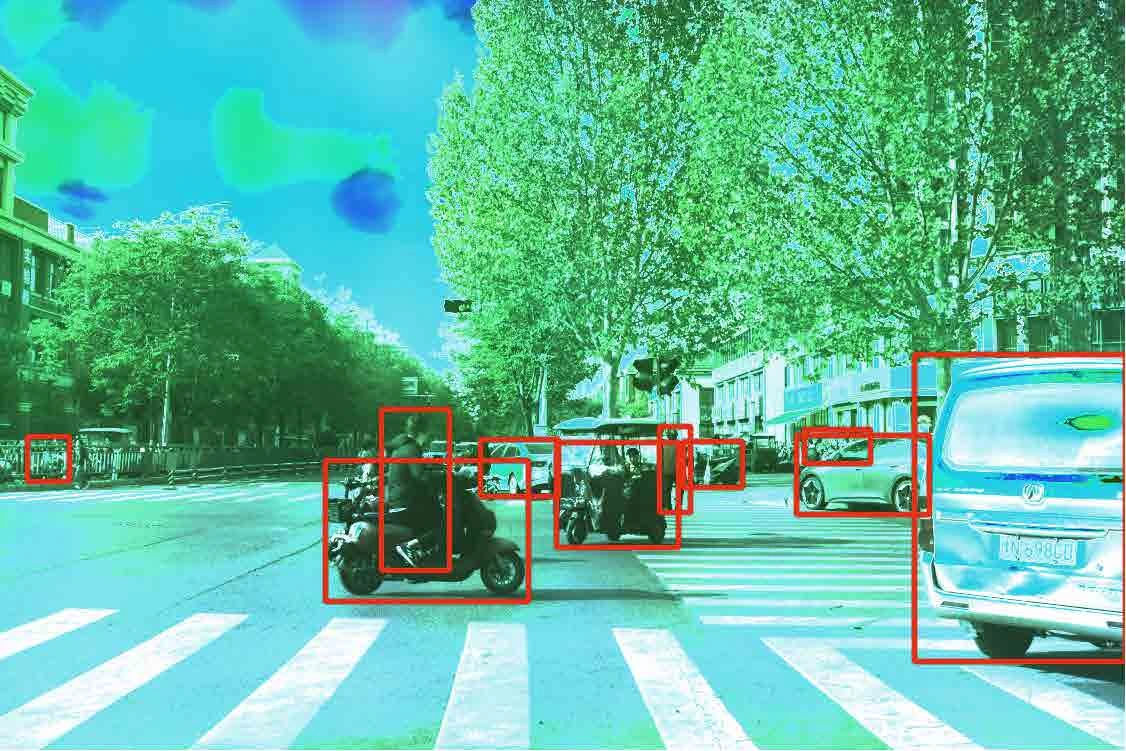
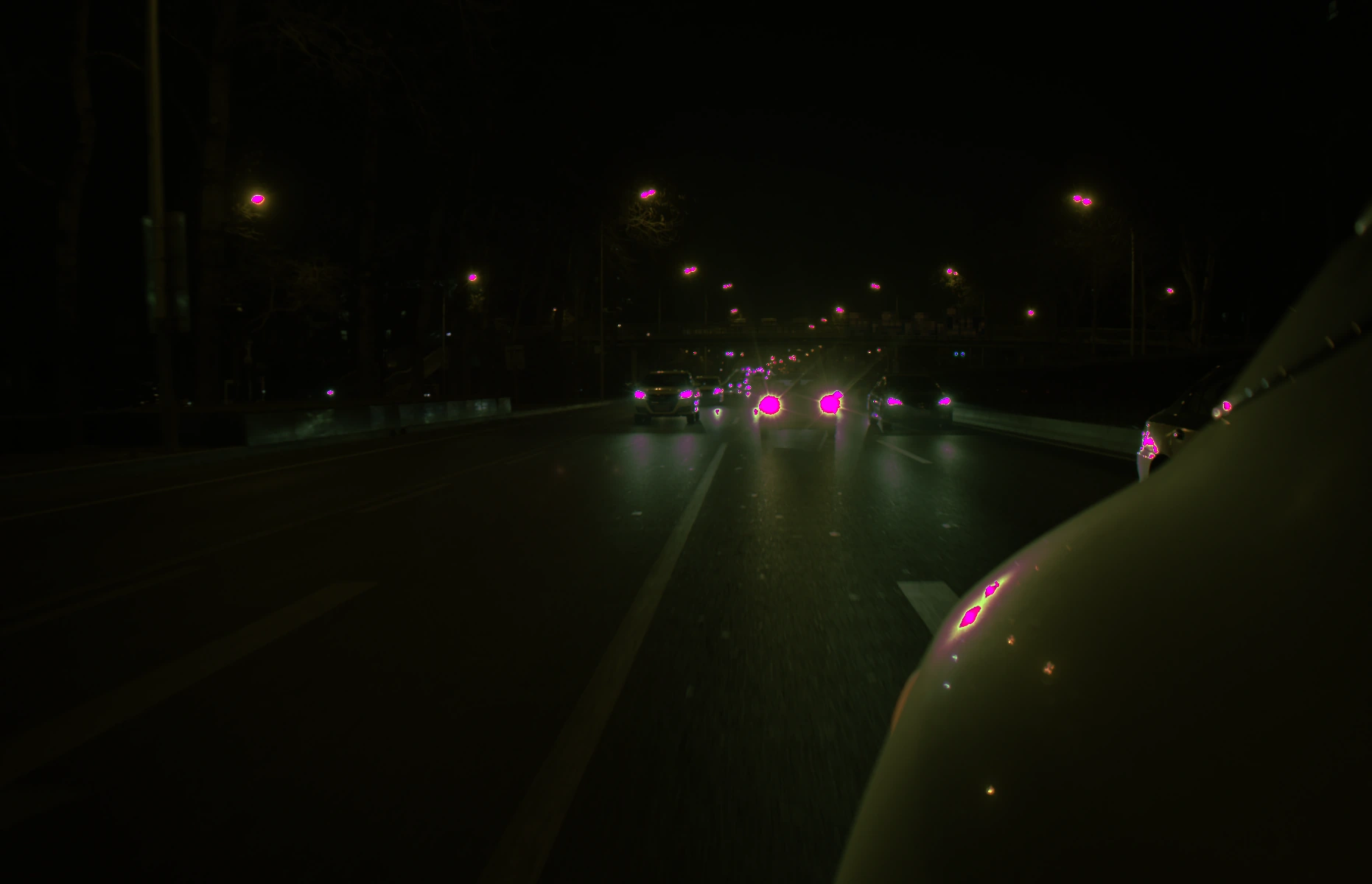
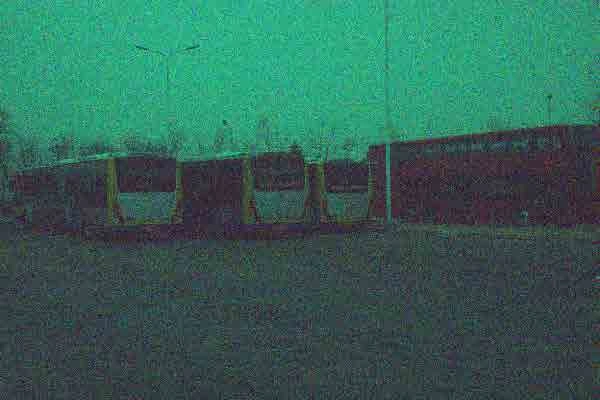
- Bézier curveOne curve per channel lifts the tones.
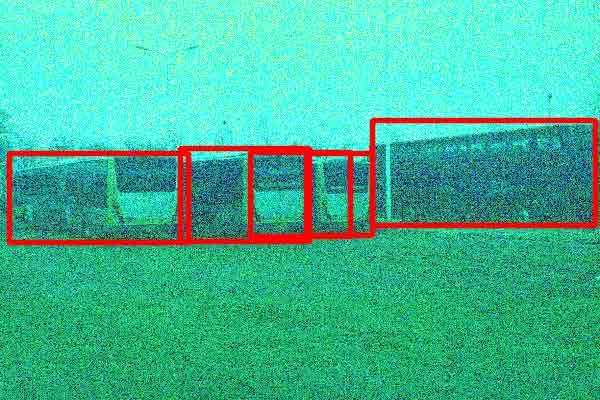
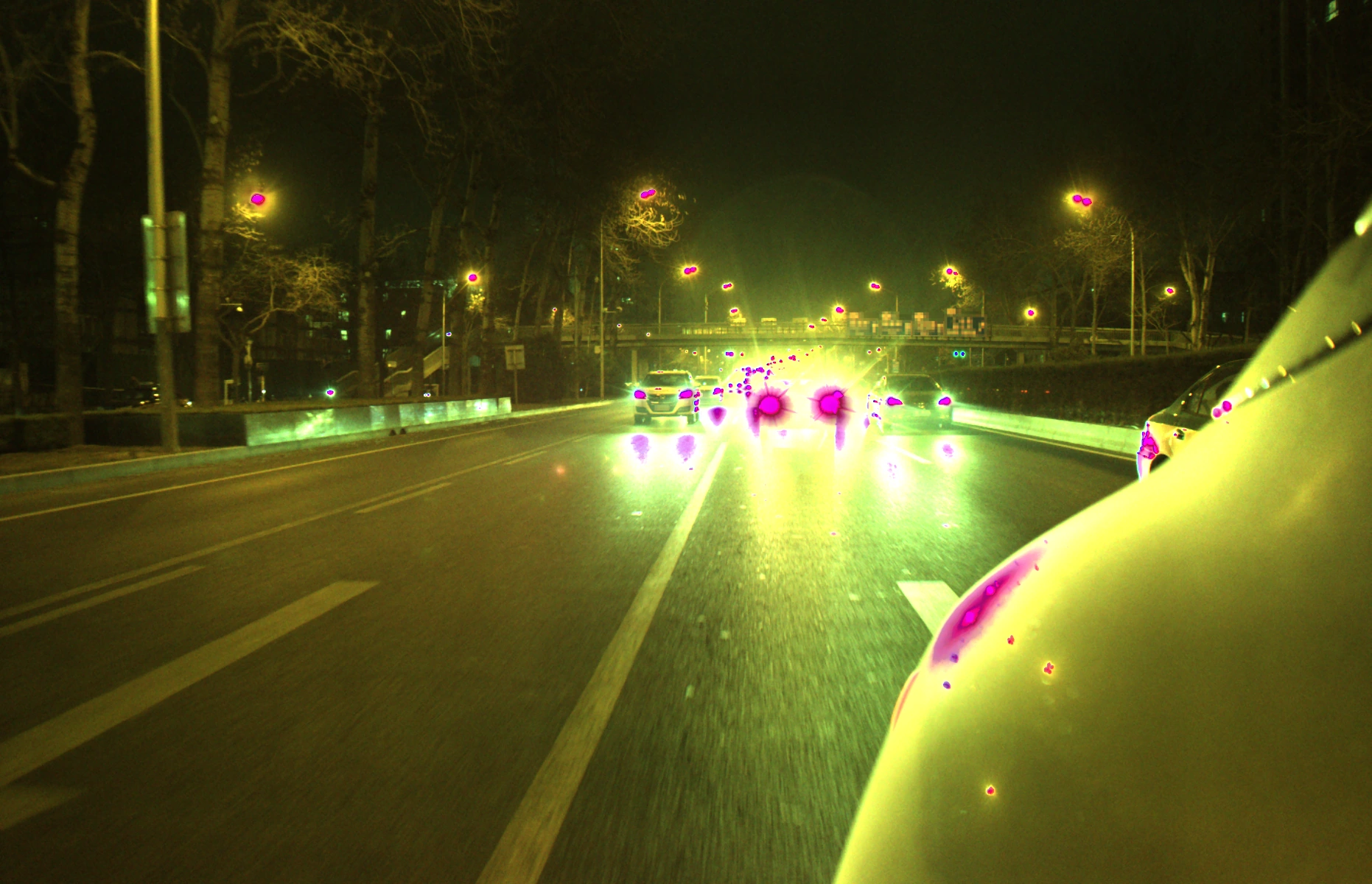
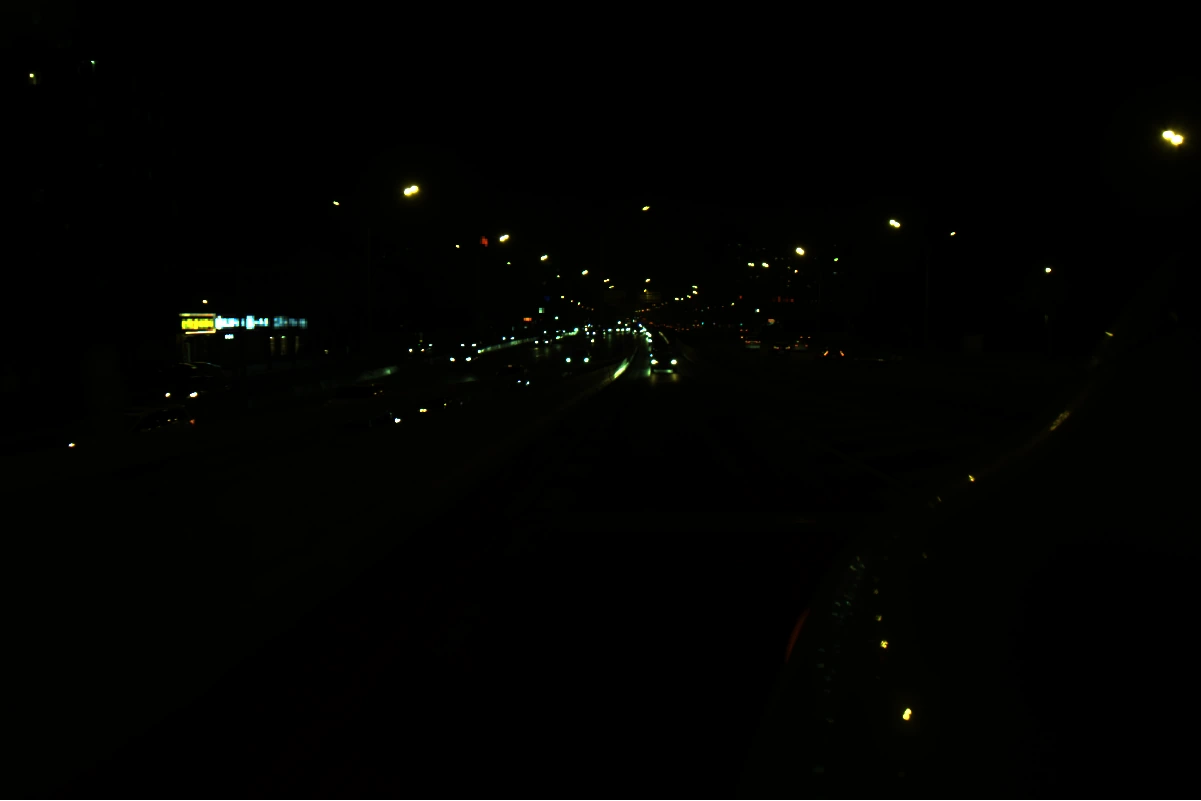
- Bilateral gridColor is finished locally, cell by cell.
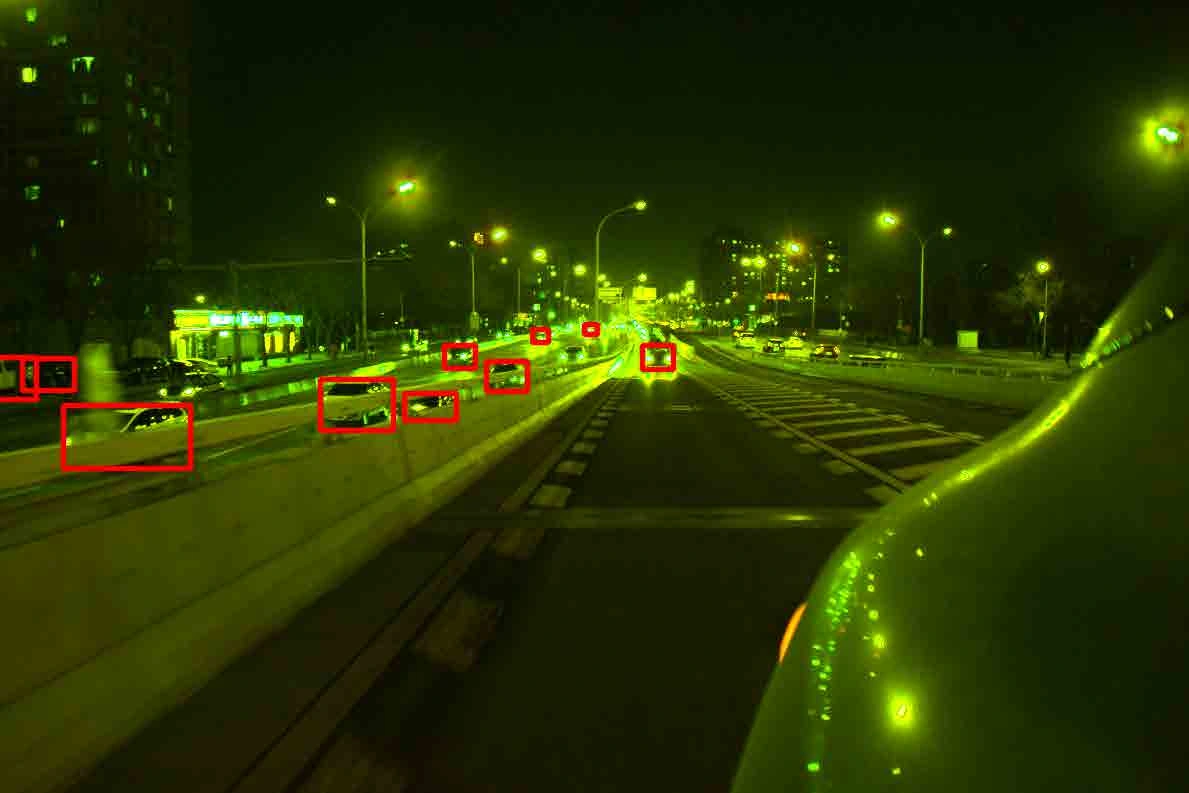
ROD · night-07732 · stage outputs of the adapter
NeurIPS 2026
The filmRAWild in seventy-two seconds.
01The problem
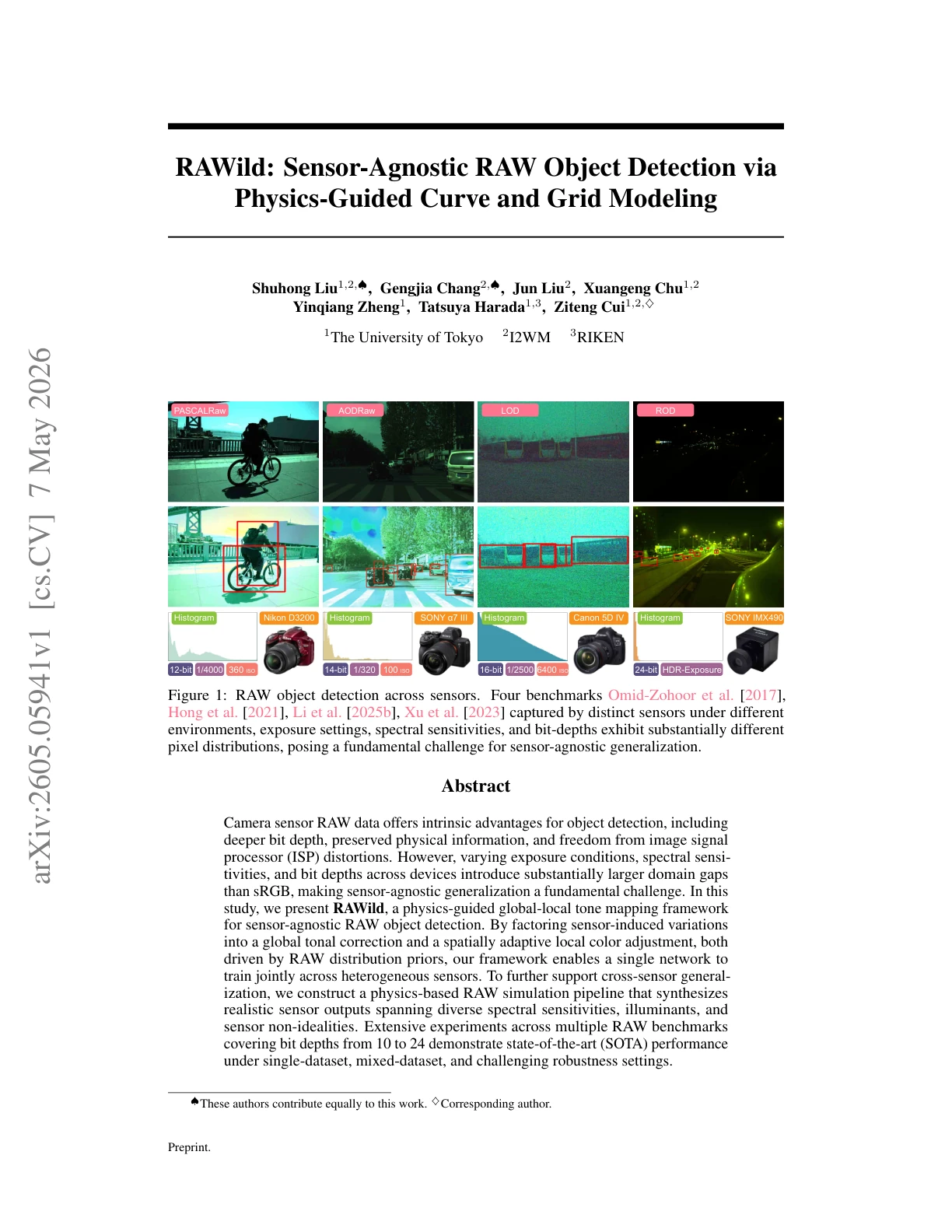
Exposure, spectral response and bit depth change from camera to camera, and a detector trained on one camera's RAW stumbles on the next.
02Overview
03The method
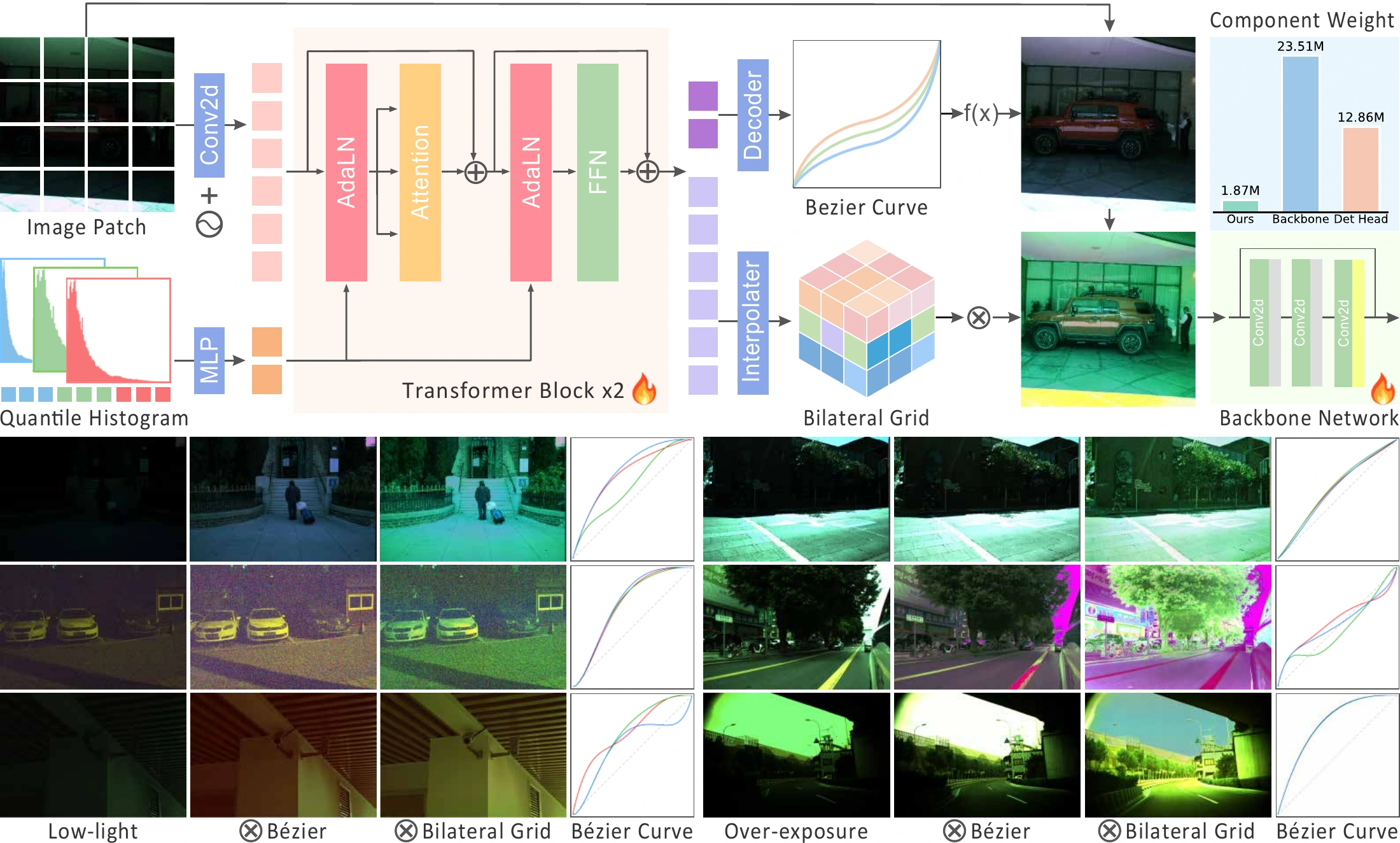
A light adapter in front of the detector, steered by the RAW histogram.
One tone curve per channel, pinned to black and white.
A 3×3 color matrix for every cell and brightness level.
A 64-quantile descriptor steers both, sensor by sensor.
ROD · night-07732 · stage outputs of the adapter
04Results
The same frame for every method, one score threshold.
Mixed-sensor detection
Multi-RAW
35.28mAP@50
+9.25over the strongest baseline
mAP@50 in percent. Multi-RAW: Table 2. LOD and ROD: strongest baseline (Dr.RAW) → RAWild, ResNet-50, Table 1. Segmentation: best mIoU in all nine settings, Table 7.
05The paper
RAWild: Toward Sensor-Agnostic RAW Object Detection via Physics-Guided Curve and Grid Modeling
NeurIPS 2026
@article{liu2026rawild,
  title     = {RAWild: Sensor-Agnostic RAW Object
               Detection via Physics-Guided Curve and
               Grid Modeling},
  author    = {Liu, Shuhong and Chang, Gengjia and
               Liu, Jun and Chu, Xuangeng and
               Zheng, Yinqiang and Harada, Tatsuya and
               Cui, Ziteng},
  journal   = {arXiv preprint arXiv:2605.05941},
  year      = {2026}
}